Acrylic vs Gel Nails: The Ultimate Guide to Choosing the Right Manicure
Gel Manicure vs Acrylic Nails: Solving the Age-Old Debate
Acrylic vs gel nails is one of the first questions every beauty student and salon client asks, and honestly, it's a fair one: both options promise strong, good-looking nails, but they get there in completely different ways. Whether you're a nail technician building your own kit, a beauty student working towards your first qualification, or someone booking a manicure for the first time, the gel or acrylic nails decision shapes everything from how your nails look to how they feel day to day.
Gel nails are prized for their glossy, natural-looking finish and flexible wear, while acrylic nails are known for serious strength and added length. This guide breaks down the real differences between gel and acrylic nails, covering durability, appearance, cost, application process, and nail health, using verified research so you can make a confident, informed choice, whether for yourself or your clients.
Gel Nails vs Acrylic Nails: The Key Differences at a Glance
What Really Sets Gel and Acrylic Apart
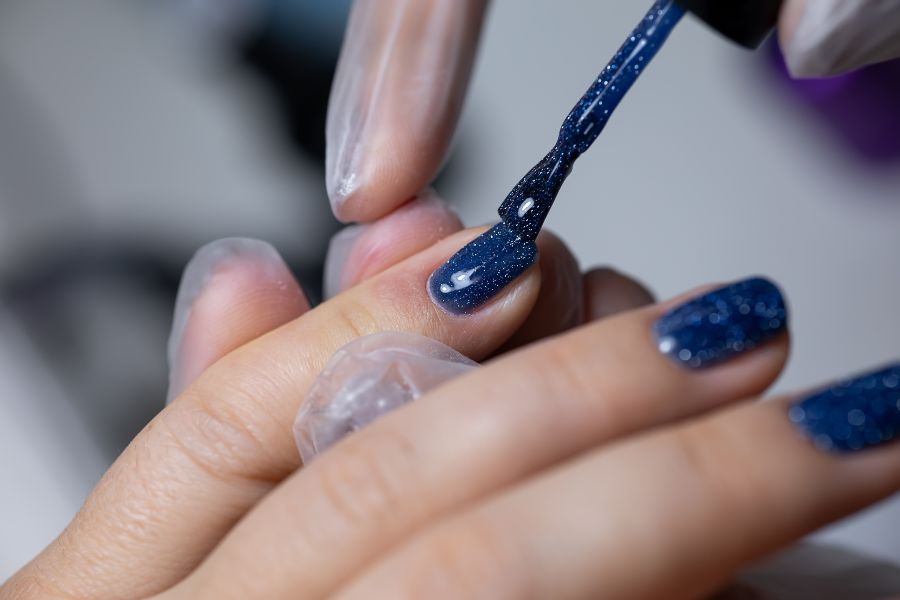
The main difference between gel and acrylic nails comes down to chemistry and cure method. Gel nails are made from light-curable resin that hardens under a UV/LED nail lamp, layer by layer; cure times vary by product and lamp, commonly around 30 to 60 seconds with LED systems and sometimes longer with UV systems. Acrylic nails, on the other hand, are created by mixing a liquid monomer with a powder polymer to form a moldable paste, which is sculpted onto the natural nail or an extension tip and hardens naturally in the air, with no UV light needed for the acrylic itself.
Most sets are then finished with a coloured gel and a gel top coat, cured under UV or LED light, to give the surface its shine. Coloured acrylic powder skips the coloured gel step, since the colour is already built into the powder, but a gel top coat is still commonly used on top for the same glossy finish.
Feel, Finish and What They're Not
Because of this, gel nails tend to feel lighter and more flexible, with a glossy, natural finish that's popular for everyday wear, while acrylic nails are firmer, more sculptable, and better suited to added length and dramatic shapes. It's also worth remembering that gel and acrylic nails aren't the same as traditional nail polish or regular nail polish, both of which simply sit on the natural nail and air-dry without any curing step, rather than reinforcing or extending it the way gel or acrylic systems create.
Neither gel nor acrylic is universally "better": the right pick depends on your nail health, lifestyle, and how much maintenance you're willing to commit to. Here's a side-by-side snapshot to make the comparison easier:
|
Feature |
Gel Nails |
Acrylic Nails |
|
Formula |
Liquid resin |
Liquid monomer + powder polymer |
|
Cure/dry method |
UV or LED light (30–60 sec per coat) |
Air-dries naturally |
|
Finish |
Glossy, natural-looking, flexible |
Firm, opaque, easily sculpted |
|
Odour |
Less odour during application |
Stronger chemical smell |
|
Average longevity |
2–3 weeks |
3–6 weeks with fills |
|
Typical cost (AUD) |
$45–$110 |
$40–$100 |
Gear Up Before You Choose
Whichever way you lean, having the right kit on hand makes the whole process smoother from the first coat to the last file stroke. Browse nail tools built for precise, professional-grade application.
Durability and Longevity: Which Manicure Actually Lasts Longer?
How Long Do Gel and Acrylic Nails Really Hold Up
Acrylic Nails: Built for Toughness
If pure toughness is your priority, acrylic nails generally win:
- A full set can last three to six weeks with a fill every two to three weeks
- The powder polymer hardens into a durable, rigid structure
- Acrylic manicures hold up well for people who use their hands constantly, think hairdressers, tradespeople, or parents of young kids, though some nail technicians recommend hard gel instead for this exact lifestyle, since it offers similar strength with more flexibility
Gel Nails: Flexible, Not Fragile
Gel nails, by comparison, typically last two to three weeks before the natural nail's regrowth or slight chipping becomes noticeable, and they're best refreshed rather than left to grow out too far. That said, don't write gel off as the "weaker" option:
- Its flexibility is actually a strength in daily wear
- Gel nails bend slightly on impact rather than cracking outright
- This can prevent the kind of sudden breaks that acrylic nails are prone to under serious force
What Shortens the Lifespan of Either
Regardless of which system you choose, a few things will shorten the lifespan of a gel manicure or an acrylic manicure:
- Brittle nails
- Nail biting
- Frequent hand-washing
- Manual work
Setting realistic expectations with your nail technician about your lifestyle is genuinely worth the conversation.
Gel vs Acrylic Nails: Appearance, Finish and Trending Nail Art
Natural Glow or Bold Sculpting: Which Look Wins Right Now
When it comes to appearance, gel nails are the clear winner for a natural, glossy finish. Because gel is thinner and more translucent than acrylic, it mimics the look of a healthy natural nail underneath a high-shine top coat, which is why it's the go-to for soft French tips, milky "your nails but better" bases, and detailed hand-painted nail art.
Acrylic nails, by contrast, are opaque and far easier to sculpt, which makes them the natural choice for dramatic length, coffin or almond shapes, and structural 3D nail art like encapsulated florals or textured designs. The main difference in appearance really comes down to that glossy finish versus a firmer, more natural-looking sculpted canvas your nail tech can shape however you like with a brush and a little patience.
|
Feature |
Gel Nails |
Acrylic Nails |
|
Finish |
Glossy, natural-looking, translucent |
Opaque, firm |
|
Best for |
Soft French tips, milky bases, hand-painted art |
Dramatic length, coffin/almond shapes, 3D art |
|
Trending styles |
Chrome fade, micro French, opal cat-eye |
Ombré coffin, pink square, encapsulated art |
|
Shape flexibility |
Limited (follows the natural nail) |
High (easily sculpted to any shape) |
Current trends lean into both strengths. Gel-based looks such as chrome fade finishes, micro French tips, and opal cat-eye gel polish are dominating natural-nail lovers' mood boards, while acrylic-based styles like ombré coffin sets, pink square acrylics, and encapsulated art continue to headline for anyone chasing added length or a bolder, sculpted look.
In Australia specifically, negative space design and soft, nude-toned nail art remain some of the most consistently requested styles at nail salons, reflecting a broader shift away from maximalist looks towards understated, wearable nail treatments.
Bring Your Vision to Life
From micro French tips to encapsulated florals, the right supplies make all the difference between a good set and a great one. Discover nail art essentials for your next design.

Acrylic Nails vs Gel: Cost, Application Process and Aftercare
Budgeting, Removal and What Happens in the Chair
Cost
In terms of cost, a standard set of gel nails or acrylic nails in Australia typically falls between $40 and $110, depending on the salon, design complexity, and whether you're adding gel extensions or nail art. Acrylics can work out more cost-effective over time since fills (rather than a full redo) keep a set going, while gel manicures usually need a fuller refresh every few weeks.
|
Factor |
Gel Nails |
Acrylic Nails |
|
Standard set (AUD) |
$45–$110 |
$40–$100 |
|
Refresh cycle |
Full redo every 2–3 weeks |
Fill every 2–3 weeks |
|
Removal time |
10–15 minutes |
20–30 minutes |
Application Process
The application process for gel and acrylic nails looks quite different from the client's chair:
Gel nails:
- The nail is prepped and primed, with light buffing to ready the surface
- A base coat is applied and cured under UV light or an LED lamp
- One or two layers of gel polish are painted on, curing each layer before the next
- A top coat applied and cured to seal in the colour and shine
Acrylic nails:
- The nail is prepped and primed, so the acrylic bonds properly to the natural nail
- The nail technician mixes liquid monomer and powder polymer on a brush to form a moldable paste
- The paste is applied directly to the nail or extension tip
- It's shaped into the desired shape while still workable
- The set air-dries naturally, with no curing lamp required
Both removal processes are best left to a professional nail technician, since picking or peeling off product yourself takes fragile layers of the natural nail plate with it. A properly cured, properly removed nail enhancement should never feel like a battle, and a rushed removal process is one of the most common causes of long-term nail damage regardless of which durable system you've chosen.
Hard Gel vs Soft Gel
Two related systems worth knowing about are hard gel and soft gel.
- Hard gel is more durable and is often used to create gel extensions or overlays that need real structural strength. Once fully cured under a UV lamp, hard gel can rival acrylic for toughness without any powder polymer at all.
- Soft gel is more flexible, is always cured under UV light or an LED lamp in thinner layers, and is typically soaked off rather than filed off, making it a gentler middle ground between full acrylic manicures and standard gel polish. Shellac manicures, a well-known brand of soft gel polish, sit within this category and remain a popular low-maintenance option for people who want colour and shine without a full nail extension.
Aftercare
Whichever application methods your nail technician uses, proper aftercare protects the nail bed and cuticle in the same way:
- Gently push the cuticle back rather than cutting it, to keep the seal against moisture and bacteria intact
- Moisturise the cuticle and surrounding skin daily
- Avoid harsh acetone soaks on the skin beyond what's needed for removal
- Let a professional handle removal rather than picking or peeling product off yourself
- Take a short break between sets if your natural nails start to feel weak or thin
Nail Health and Safety: Is Gel or Acrylic Better for Your Natural Nail?
Protecting the Nail Plate, Nail Bed and Skin Long-Term
UV Exposure and Skin Cancer Risk
Nail health is where the acrylic vs gel nails conversation gets genuinely important, and it's worth leaning on dermatology research rather than salon folklore:
- According to the American Academy of Dermatology, gel manicures can be tough on the natural nail over time, contributing to brittleness, peeling, and cracking, and repeated UV exposure during curing has been linked to a modestly increased risk of skin damage on the hands
- Dermatologists recommend applying broad-spectrum SPF 30+ sunscreen or wearing fingerless gloves before each session to minimise UV damage while your gel polish or gel nails cure, since a protective base coat and a well-applied top coat won't shield the skin from UV light
- A 2023 study published in Nature Communications by researchers at the University of California San Diego found that irradiation from UV nail polish dryers caused measurable DNA damage and mutations in human and mouse skin cells, with mutation patterns similar to those seen in melanoma, although the study stopped short of confirming a direct increase in skin cancer risk in humans from typical salon use
- Both gel extensions and standard gel polish rely on UV light or an LED lamp to cure, so simple protective habits go a long way
Allergic Reactions to Acrylate Chemicals
Acrylic nails carry a different set of safety considerations. The liquid monomer and powder polymer used in acrylic and gel systems both contain (meth)acrylate chemicals, and dermatology research has flagged rising rates of allergic reactions to these ingredients:
- A UK-wide audit by the British Association of Dermatologists found that 2.4% of people patch-tested reacted to at least one (meth)acrylate chemical common in acrylic nails, gel nails, and gel polish, with 2-hydroxyethyl methacrylate (2-HEMA) the most frequent culprit: a trend the researchers described as a genuine contact allergy epidemic affecting both clients and nail technicians
- A more recent analysis published in Contact Dermatitis echoed this, noting that despite EU restrictions on some ingredients, contact allergy to HEMA-based nail products has continued to climb through 2023 and 2024
- Minimising Risk Through Good Technique
None of this means gel and acrylic nails are unsafe when done properly; rather, it underlines why nail health depends heavily on technique. Over-filing or over-buffing the nail plate, using a nail technician who skips proper prep, or picking off product yourself are the real drivers of thinning, weak, or brittle nails, far more than the systems themselves. A few simple habits go a long way towards a healthier nail journey, regardless of which system you use:
- Take short breaks between sets to let the natural nail recover
- Moisturise the cuticle daily to keep the nail bed protected
- Choose a licensed nail salon with sterile tools
- Book a patch test or chat with a dermatologist first if you have known sensitivities
One More Option Worth Knowing
Before you land on gel or acrylic, it's worth a quick mention: nail dipping systems are gaining traction as a low-odour, no-lamp alternative that borrows strengths from both.

Gel or Acrylic Nails? The Final Verdict for Your Next Manicure
There's no single winner in the gel vs acrylic debate: the right choice really does come down to your natural nail condition, lifestyle, and how much upkeep you're happy to commit to. If you want a natural-looking, flexible, low-maintenance manicure with less odour and gentler removal, gel nails are hard to beat.
If you're after serious durability, dramatic added length, or bold sculpted shapes that outlast daily wear, acrylic nails are usually the better bet, and with Australia's personal care and nail salon industry continuing steady growth, driven partly by rising demand for nail treatments and self-care services, there's never been a better time for aspiring nail technicians to master both systems.
Many people who train in the nail industry go on to become their own boss, whether through salon work or a mobile setup, precisely because demand for quality gel and acrylic manicures keeps growing.
Whichever you choose, quality products, a skilled nail tech, and sensible aftercare will always matter more than the system itself. Explore Diamond Nail Supplies' full range of gel and acrylic products to build your next set, or your next career, with confidence.